Terpenes are not exclusive to cannabis. They are found throughout plants: citrus peel, pine needles, pepper, lavender, hops. In cannabis, they help create the aroma and give you clues about the product character.
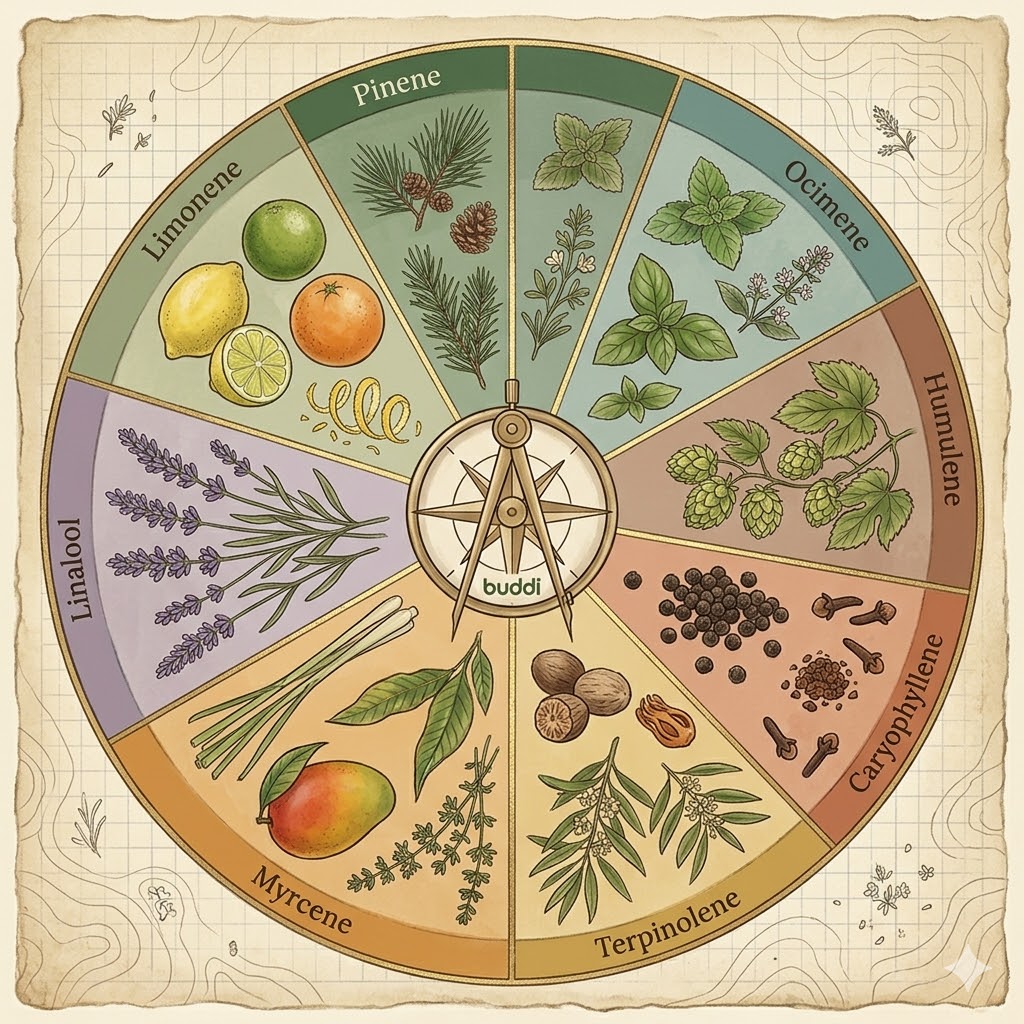
Read the top terpene first
The first terpene in the list is usually the clearest clue. Myrcene-forward products often read heavier, limonene-forward products often read brighter, and caryophyllene-forward products often bring a peppery, grounded note.
Total terpenes tells you how loud the profile is
Total terpene percentage is a volume knob. Around 1 to 2 percent can be subtle. Around 3 to 4 percent often means a more aromatic, expressive batch.
Terpenes are clues, not guarantees
Your dose, tolerance, form, CBD level, and setting still matter. Terpenes give a better read than strain names alone, but your own journal is what turns a clue into a pattern.
How buddi uses terpenes
When you decode a label, buddi combines terpene clues with cannabinoids and your preferences instead of pretending one terpene explains the whole experience.
Want terpene clues in plain English?
Open buddi to decode cannabinoids, terpenes, and potency in plain English. Works on phone, tablet, and desktop.
Open buddi ->Common questions
What do cannabis terpenes do?
They shape aroma and may influence the character of a product, but they work alongside cannabinoids, dose, form, and tolerance.
How much terpene is a lot?
For flower, total terpenes around 3 to 4 percent is often a louder profile. Lower percentages can be more muted.
Are terpenes better than indica or sativa labels?
They are usually more specific chemistry clues, but they are still clues rather than guarantees.